ქეში

გადაამუშავეთ ბილდის არტეფაქტები თქვენს გუნდსა და CI-ში ერთნაირი კოდის ხელახალი კომპილაციის თავიდან ასაცილებლად

გამოთვლა

გაუშვით რანერები წამებში და დაამასშტაბირეთ თქვენს გუნდთან და აგენტებთან ერთად

ტესტები

შეამოწმეთ მხოლოდ ის, რაც შეიცვალა და ავტომატურად აღმოაჩინეთ არასტაბილური ტესტები

Previews

გაუზიარეთ თქვენი აპლიკაცია მყისიერად URL-ით — დააჭირეთ და გაუშვით ნებისმიერ მოწყობილობაზე

შექმნილი პროექტები

გაამარტივეთ მოდულური Xcode პროექტები უფრო მარტივი შენარჩუნებისა და მასშტაბირებისთვის

რეგისტრი

ჩამოტვირთეთ მხოლოდ ის, რაც გჭირდებათ — უფრო სწრაფი და მსუბუქი ბილდები ადგილობრივად და CI-ზე

შესახებ

გაიგეთ მეტი Tuist-ის შესახებ და გაეცანით გუნდს

საჯარო დაფა

გაეცანით Tuist-ის ფუნქციებს საჯარო დაფაზე

მომხმარებლები

ნახეთ, როგორ ზრდიან წამყვანი გუნდები პროდუქტიულობას Tuist-თან ერთად

Slack

შეუერთდით საზოგადოების Slack-ს

ნიუსლეტერი

იყავით ინფორმირებული - გამოიწერეთ ჩვენი სიახლეები

GitHub

ჩვენს წყაროები, საკითხები და PR-ები

საზოგადოების ფორუმი

შეუერთდით დისკუსიებს და გაუზიარეთ იდეები ჩვენს საზოგადოების ფორუმზე

Cache volumes recover when they fill up

Cache volumes keep dependency directories between CI jobs, and tools rarely clean up after themselves, so saved contents grow from run to run. Once a volume is nearly full, every job that mounts it has little room left to write, and jobs can fail with errors such as No space left on device.

Volumes now recover on their own. When a volume's saved contents reach 80% of its capacity and a job runs out of space on them, the next job starts with an empty volume and saves a fresh copy. Large caches that still leave jobs room to write keep their saved contents, and a full volume costs one failed job and one cold run instead of every job failing.
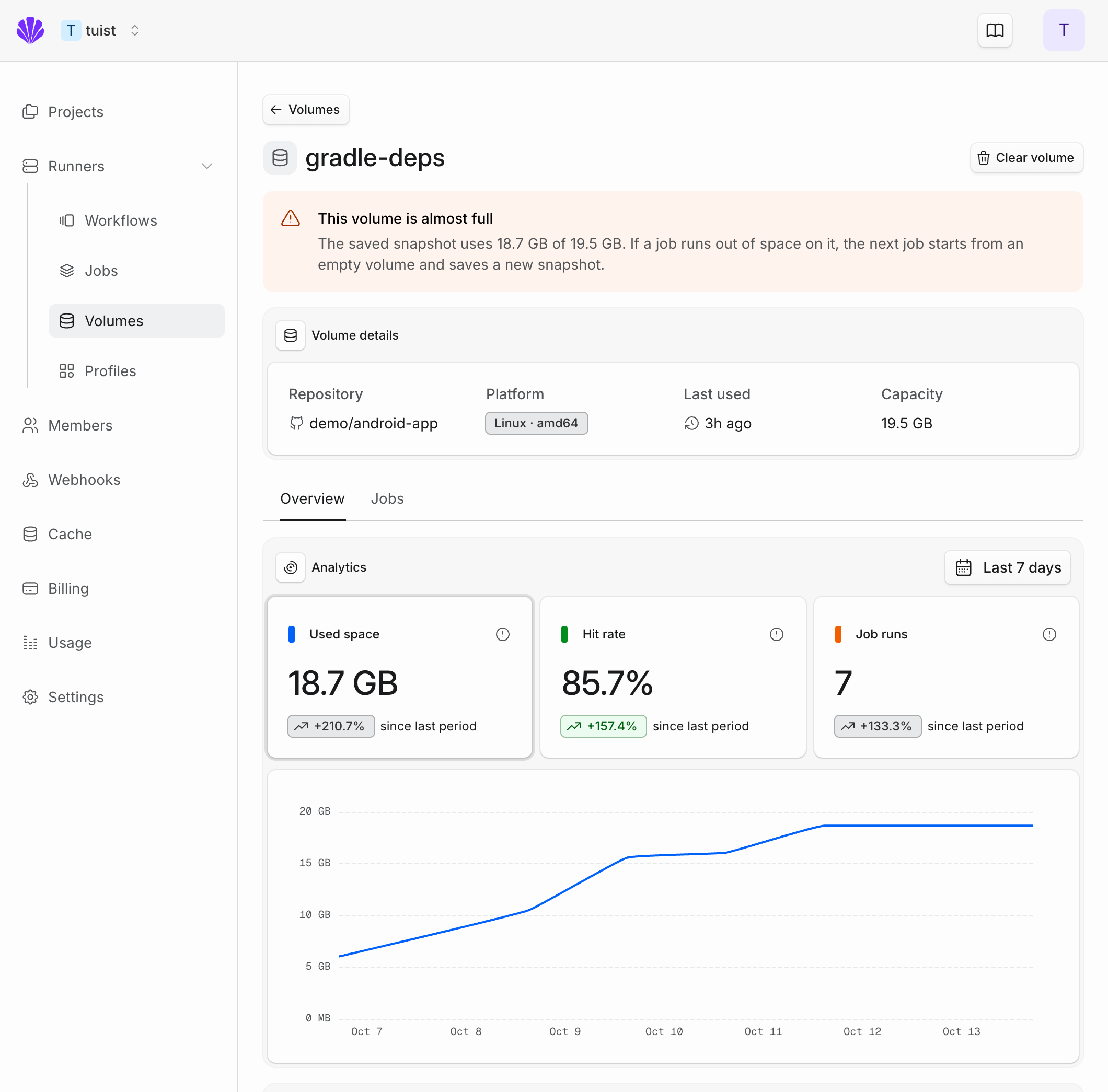
A cache volume's details page warning that the volume is almost full, with storage, hit rate and job run trends

The volume's page in Runners → Volumes warns when its saved contents are nearly full. When a failed job filled one of its volumes, the job page shows which volume ran out of space, so a full disk no longer looks like an unrelated build failure.
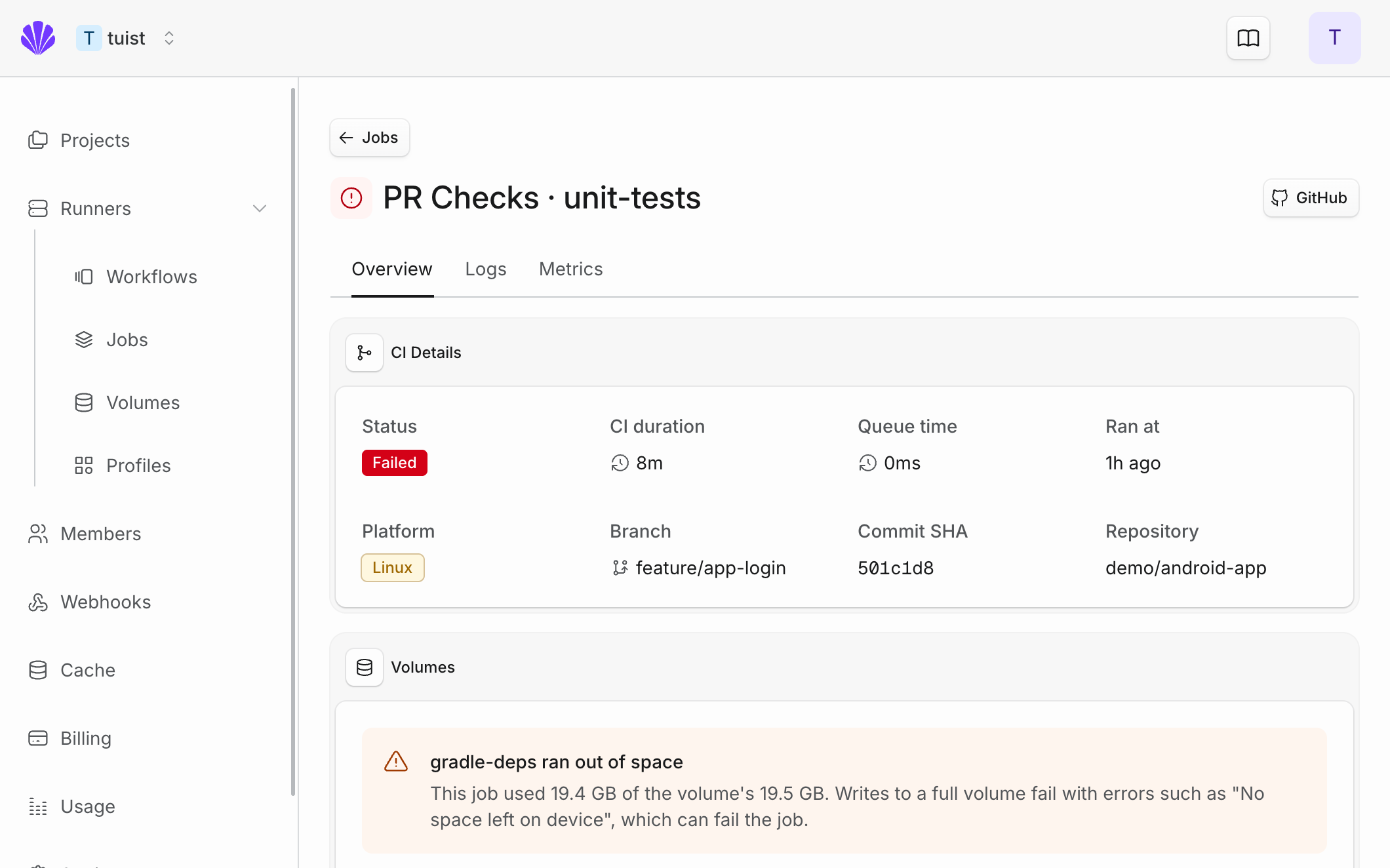
A failed job's page showing that the gradle-deps volume ran out of space

To keep volumes small, use your tool's cache cleanup settings. See the cache volumes guide for details.